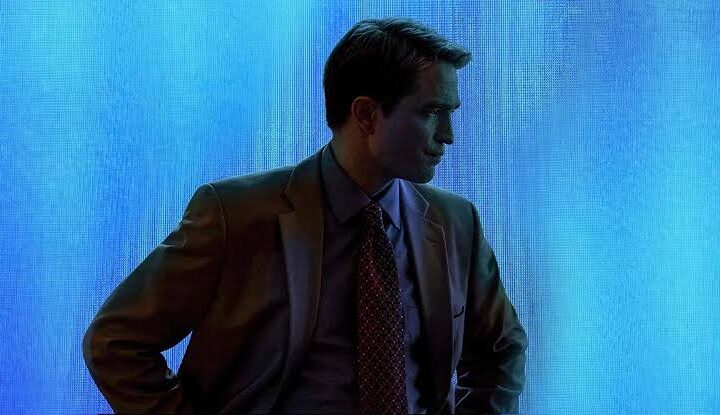
Kleber Mendonça Filho’s films (Aquarius, Bacurau, Pictures of Ghosts) have always resisted easy classification, but The Secret Agent may be his most expansive work yet—a film that moves deftly between political thriller, character study and city symphony without ever announcing its shifts. Set in Recife in 1977, during Brazil’s military dictatorship, the film follows Wagner Moura as a quietly watchful former university researcher drawn into a web of surveillance, suspicion and rising menace. Neither revolutionary nor criminal, he drifts into circumstances he only partially understands, in a world where erasure comes not only through physical danger, but through the permanent distortion of truth.
I recently caught up with Mendonça Filho to talk about The Secret Agent, which took home Cannes’ Best Director, Best Actor and FIPRESCI prizes this year. At a wide ranging discussion that covered historical context, archival research, Hitchcock, journalism and the current state of film culture, the Brazilian filmmaker also reflected on why reality can’t be scrubbed from art, and why—despite ongoing industry anxiety—audiences continue to show up for films that take risks.
The Secret Agent took me by surprise. The first time I saw it I expected it was going to be some kind of tense thriller. But it’s also many other things. It’s sort of a love letter to your home city. It’s a political thriller. It’s also a personal character study. And somehow it does all of that and it manages to feel like it has a life rhythm about it, allowing time for its people.
KMF: As I was writing it, I kept thinking of so many films that made me want to make films. And I really believe that you can tell a story in many different ways. You can tell a ‘story’ which would be the plot, but you can also show where it takes place. I really believe in cities as characters. I also believe in places as characters. I can give you the example of the São Luiz Cinema, which is an important place. Aspects of life and death are discussed, actually. In Pictures of Ghosts, which is available on The Criterion Channel, I think I shot it like a character. And in The Secret Agent, I think I shot it like an actor.
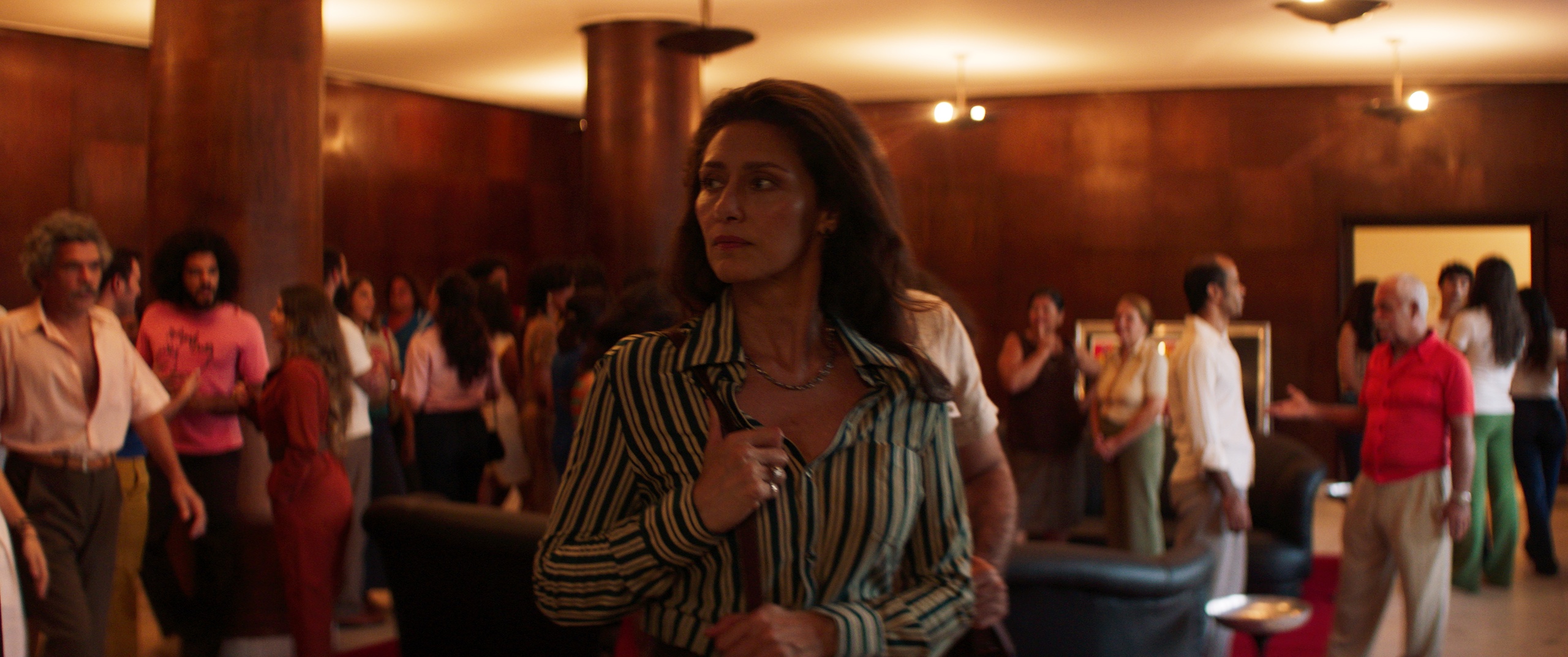
We also have many different characters in the film. As I was writing the script I thought this would be my most masculine film. And then I slowly began to realize that I was writing these women and that I love all of them. And they play very different roles. From the university researcher who’s working on the shark to Dona Sebastiana and to Elza, this wealthy woman who is really trying to help people in difficulty. And slowly I have this panorama of life in the past of my country.
I was nine years old at the time in 1977. I would never be able to make a film about the dictatorship from the point of view of a nine-year-old. But I think in the early stages of your life you’re very open and very sensitive to so many little pieces of information. But in a way, that’s what makes you and what leads you into your older self; into your teenage and adult years. Many of these things went into the script. They could be called atmosphere, but I really call it life.
The movie year 1977 was a formative one for me as well. And those things you talk about, which are part of memory or nostalgia, are things now at our age that I try to revisit in certain ways, whether it’s the sense memory even returning to films that were seminal from that period. You must have felt similar in recreating this world; maybe through the character of young Fernando.
KMF: Yes, the creative process is really unexpected and it is impossible to predict the unpredictable. Because in fact, the memories I have of 1977 or 1978- we had a health crisis in my family. My mom was fighting breast cancer and my younger uncle had the job of taking the kids away from the house as much as he could. He took us to the cinema a crazy amount of time. And I was already very much into films as a very young kid. But that time gave me a deep sense of the downtown area and the movie theaters and the films that I saw, and also the films that I never got to see because of the rating system. So even if I didn’t see The Omen, I saw the poster and lobby cards outside. I really needed to see this film (that was) ‘Rated 18’ (but was told), ‘You will never see this film. Forget it.’ So that gave me a very interesting sense of time and place, which I think is in the film. But this is not a film about a child in a family that is going through a health crisis. This is something else. But I think the moment is very much present in the texture of the film.
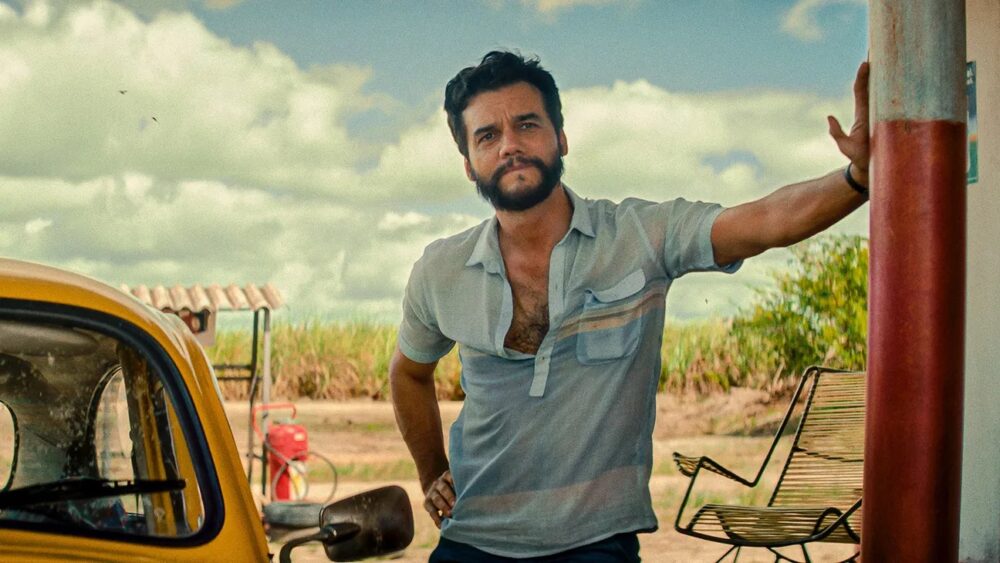
You mentioned Pictures of Ghosts, and your work on that film aligns what you’re talking about right now in terms of excavating the era. It influenced The Secret Agent, correct?
KMF: Very much so. It’s amazing to discuss where a film comes from. I just told you about my family, but it’s also true that Pictures of Ghosts introduced me to an amazing amount of material which took me back to the whole history of this downtown area in the 20th century. And of course I was more attracted to the 70s because I could connect my own personal memory to the hard facts in the newspapers. You could see it in the newspapers and things that you vaguely remember, then now you could actually understand what it was. And with all of the photographs and films in Pictures of Ghosts, I had the budget to restore some Super 8 and 16 millimeter films that connected me in a very emotional way to that time. And then I found myself at ease in terms of writing The Secret Agent. So that film led me to The Secret Agent, which wouldn’t exist without the emotions that I had working on Pictures of Ghosts, a film of which I am very proud.
It has been more than 50 years at this point, and there are many different ways that you might be able to create a look and feel or aesthetic for an era. What struck me the most was the supersaturation of the color, the vitality and heat and warmth, not just in the colors but in the actual heat of the moment. It is quite an interesting choice to evoke a place into time. It’s very alive.
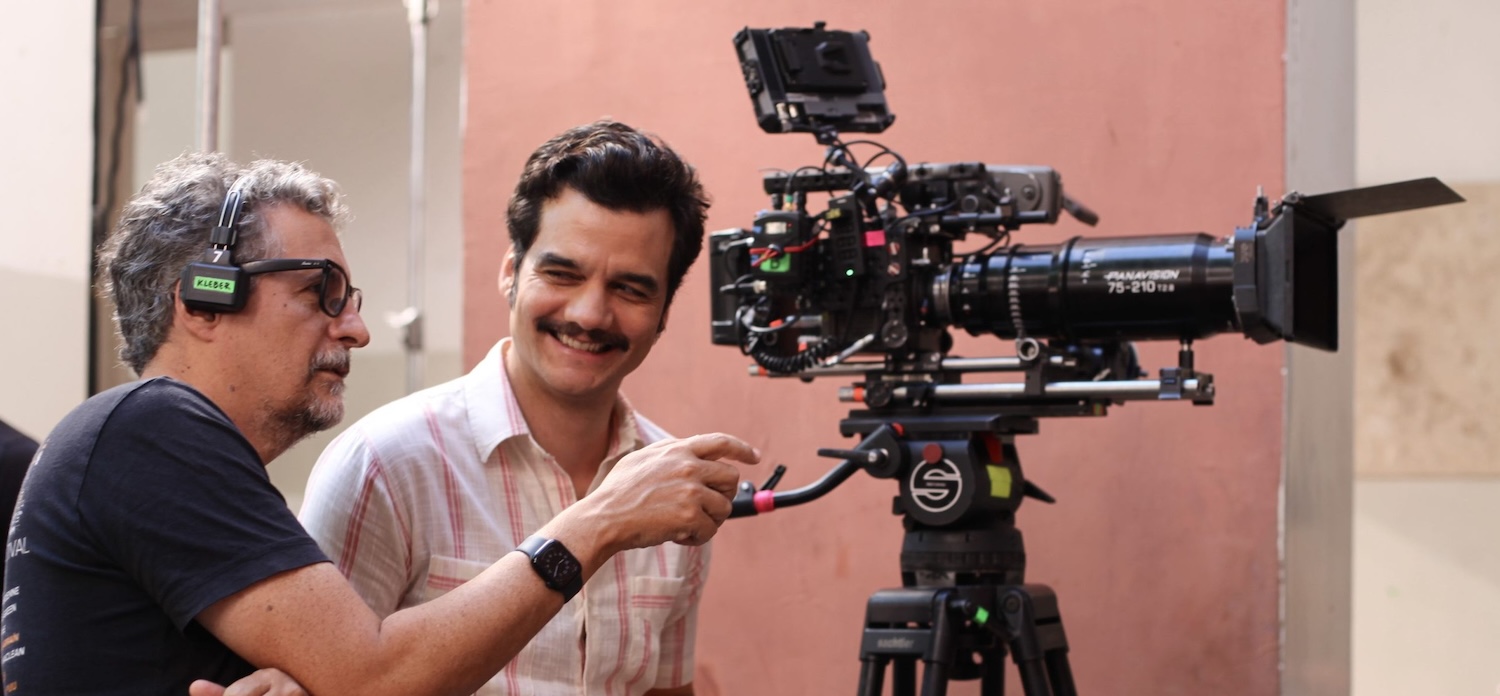
KMF: It’s funny because I was just in Mexico City and I posted some pictures on my Instagram and some guy said, ‘That’s funny, I see no yellow-tinted Mexico City, like in some American movies.’ Spot on! Well, technology now is very readily available. For all of us who make films, you might have a very small budget or a hundred million dollar budget. We can access more or less the same kind of equipment and cameras and lenses. I also believe that there is a certain standard for the way contemporary films look that can be applied to the way the past is photographed in many films. It’s just a question of personal taste. But I really talked to our wonderful director of photography, Evgenia Alexandrova, about using old Panavision lenses from 55 or 60 years ago. They are incredible and they have something that the new lenses do not have. They have an organic imperfection. I don’t ever want to sound like I’m saying that they are not perfect, as they are perfect in their own ways, but they have a certain look that I find incredibly attractive. And not only that, I grew up watching film shots with those lenses. That really helps me think and dream the film.
We also use the Alexa 35, which is an amazing modern camera. It was never, ever the case between myself, Evgenia and Dirk Meier, the colorist, to make it look “film-like.” It was really about giving Brazil the colors that it has. The other thing is that all of this equipment—German equipment, American-made lenses, Japanese lenses, American-made cameras—they are not really made for the tropics; they are made for a temperate climate kind of light. Many films are in fact shot with kind of low light; magic hour-type light.
This is not something that I wanted to do in The Secret Agent and I didn’t do in Bacurau or any of my other films. The light in Recife is incredibly hard as it’s the tropics. Sometimes you step out of your home and say, ‘Oh dear, it’s bright today.’ I really wanted that. We shot at any time of the day with no restrictions because the light was going to be just fine. The magic hour in Brazil is actually no more than 35 minutes. So I really like the way it looks. Going back to what you said about that time that we remember, it was very much about the colors that I remember, and that Thales Junqueira, our wonderful art director, remembers. I’m very happy with the way the film looks. We could talk for two hours about the image, but this is what I can tell you now.
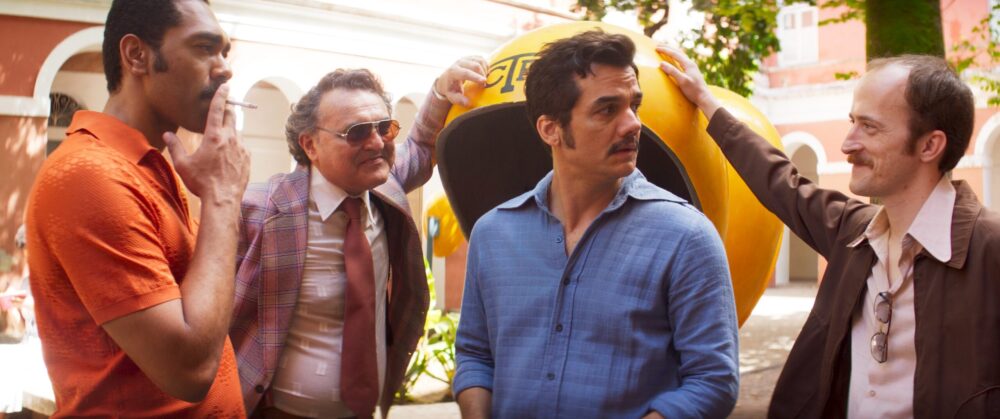
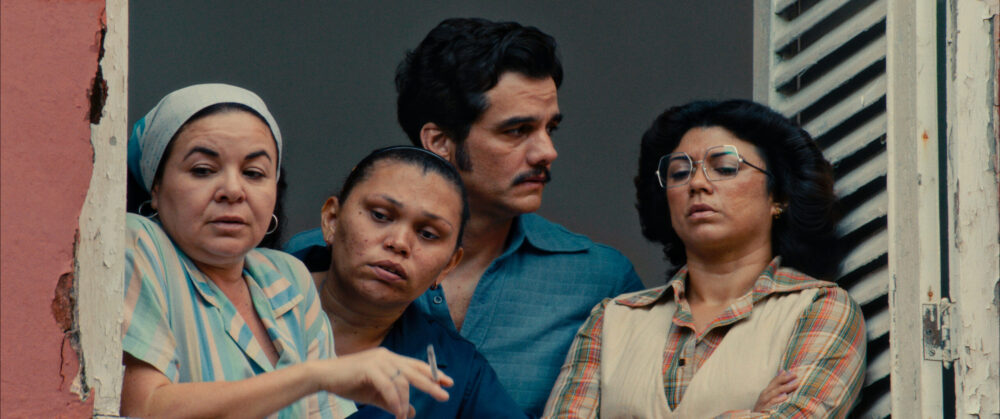
You wanted to work with actor Wagner Mora for quite some time prior to this movie. And his performance is so intriguing because having seen the film twice now, he has a real stillness at the core. He’s observant, fairly quiet for a good amount of the movie, contemplative. There’s always something happening inside but sometimes we’re not really privileged to it. It takes a bit of time in the film to understand exactly who this character of Armando is, where he’s come from and what his story is. Without always saying a lot or doing what we would call big acting, per se, he’s able to bring us directly to him. And that’s why sometimes he’ll say something, for example, about a hammer in one particular scene, and we’ll be surprised that this every man has this other thing underneath. It’s quite a performance.
KMF: I think it’s all about my understanding of Wagner, not only as an actor, but also as a film star. It’s not only about looks, which he undoubtedly has, but it’s about owning the shots. He inhabits every shot of the film with a lot of authority. And only great actors can do that. And I think that the situation his character finds himself in is complex. He often is unaware of what is actually happening, which is something I think anyone can identify with in life; we all have found ourselves in situations of which we were unaware. It might come as a surprise, but one film that I discussed with Wagner is a very different film in tone, but I think it has a similar situation and a similar presence of a great star, who’s just so interesting to look at at any time of the film, and that is Hitchcock’s North by Northwest. Cary Grant finds himself in a series of situations that he himself is not fully aware of, and he keeps dealing with each situation in a really interesting way. I’m not even sure exactly what happens in that film, but it’s so consistently interesting and engaging and exciting. And it comes from Cary Grant’s incredible screen presence. Even when he’s trying to get out of a terrible situation, you can see the machines going on inside his head, and I wanted something similar with Wagner, while considering that this is a very different film.
It’s funny that you mentioned Hitchcock. I felt the same as I was watching the film. We almost have in some way a Hitchcock hero, who does everything right, tries to do well and has fallen into this inadvertent situation, almost like Jimmy Stewart in Vertigo, which would be another good comparison. Like in Hitchcock we can sometimes be a bit ahead of your protagonist, or able to anticipate what’s coming even when he cannot, which creates real suspense.
KMF: I think there’s another Hitchcock which is a strong reference for this film which is The Wrong Man. Henry Fonda plays a musician and he’s mistaken for a criminal, and I love his reactions to injustice and to finding himself in a completely insane, nightmarish situation. So I really think that Hitchcock is a full master’s degree, PhD and postdoctoral course on developing characters, dramatic situations, tension, action and just plain mystery. I’m not saying that everything I do comes from Hitchcock, which wouldn’t be true. It comes from so many films that made me want to make films, but Hitchcock is quite a reference.
The filmmaking is exceptionally sharp, for example, the climactic pursuit sequence which was shot in the cold light of day with guns out, blood on the sidewalk and violence in public places, directly in front of everybody going about their lives. And the sequence where the telegram is delivered from step to step, as well as a moment near the end where the fate of one character is revealed only decades later in a photograph. That was an interesting choice.
KMF: I actually tried to write a ‘straight sequence’ but I couldn’t even get past the second line. I was simply not interested, and I believe that the press documents, letters, memos, photographs- if you do research, and I happened to be a professional journalist many years ago, I found myself in situations where I discovered something cold and cruel. I am the son of a historian who also lived through situations like that, and I think storytelling can be done in many different ways. You can do it in a classic way, which I think this film does, and you can also apply the tools of some other form of storytelling. Imagine, for example, that two friends were having a very serious conversation about something and at one point one of them says, ‘And then something happened, but I’m not able to put it into words,’ so the friend just writes something on the telephone and (shows to the other friend), and then the other says, ‘Oh my god. I’m sorry I didn’t know.’ So I think that’s one way of putting it. You can tell the story and then go 50 years into the future to have this very important piece of information given out. It is something that has been having a very strong reaction. Some are shocked, but such is the nature of history, which can be incredibly shocking. I should point out that there are two deaths—not only a physical death but the death of one’s character, because almost everything that comes out in the press in this film is either incorrect, manipulative or just plain fantasy. This death of character through an unfair association with corruption is a second death.
That idea can’t help but have current relevance not just given the Bolsonaro era but in the Trump era as well. When we think about the words you just used and the value of objective journalism, there is a serious issue in the current political moment.
KMF: I believe the independent press both in Brazil and the U.S. are doing a wonderful job at discussing reality and in realistic terms. Over the last 15 years something happened in the world where every day we began to see a group of people in society become noisier and more powerful; they actually seem to be fighting reality every day from the moment they wake up until the moment they go to bed. They fight the neighbor whom they dislike because he or she happens to live with a person of the same sex. They fight vaccines. Some of the Bolsonaro people were praying before old tires. I think that the press has done a very good job. It’s one way of making films- if you make a film that has a strong connection to your culture, country and developments that we all understand as real, you might be able to help in some way. I say this but of course I don’t really believe that films can change the world. I think they can keep the world a little more in contact with what I consider to be reality.
This is the reaction that we’ve been getting in so many countries. When we showed the film in San Sebastian in Spain, of course the discussion was about the Franco regime because it’s still an open wound in Spain. Many families would rather not talk about that, and at the end of the film there is a certain character who would rather not talk about what happened. Brazil had the amnesty law in 1979—proposed by the military—to cynically forget everything: ‘Let’s start afresh. Let’s live a new life. Let’s be happy.’ I think that really stunted the psychological development of my country in terms of dealing with memory, and it’s wonderful to see the right in Brazil, which seems to be infuriated with The Secret Agent because it seems to be in touch with reality, and they fight reality passionately. I find it’s one of the craziest developments in our times.
I so admire films like yours and Walter Salles’ I’m Still Here last year, as well those coming out of Iran from Mohammad Rasoulof and Jafar Panahi. You talked earlier about how The Secret Agent has done very well in Brazil. That seems particularly good for the younger generation—the Flavias, like your character. Sometimes contemporary thinking is that there is very not a long shelf life on culture and history for younger generations today. I’m not sure we have the same kind of artists today in America making valuable and needed political assessments, at least in film. I had a conversation a few years ago with Oliver Stone, who made many great films decades ago, interrogating Vietnam, presidents, capitalism or otherwise. When I asked him why American filmmakers no longer make these kinds of films, he explained that it will not happen again because studios don’t want to finance them and people don’t want to see them. When a film does get a bit close to reality, like Ari Aster’s Eddington this year, I guess the thinking is that people will say, ‘I’m not interested. I’ve already lived through it. I want to be entertained and I am not going to the movies to be reminded of what I can see on the news.’ People did not show up for it. So when you say that there is a market in Brazil for a movie like this and people are plugging into it, I am not sure we have the same situation here, unfortunately.
KMF: I would find it incredibly hard to make a film where every trace of reality was absent; to clean a film out of reality would be too much work. In Brazil, this film is now bigger than Wicked: For Good. I really think that people can see and fall in love with any kind of film. I’m one of these people—I love musicals, horror films, Talk Radio by Oliver Stone, Paul Verhoeven, John Carpenter. I love all kinds of films, and I think that the industry seems to put its foot down and say what people want to see. For instance, there is a discussion right from the streamers, which say that nobody wants to see films anymore in the cinema. I think that is insane. I’m a film programmer myself and have been traveling with The Secret Agent to so many countries—France, Spain, Australia, Mexico, Brazil, U.S.—and all I see is a lot of young people at the screenings, film festivals and the multiplex. It would be a very sad, troubling day if every time I went into a screening I only saw gray hairs in the audience. But that’s not what I see. I see young people asking great questions. I told Neon that I would love to meet high school or university students because these are great audiences; they are curious and not jaded.
We have to be very careful with what the industry wants to happen. I don’t think they are necessarily in touch with the actual facts of filmgoing. As far as I can see, all of my films will play first and foremost in theaters. I have to say I am always very happy when the films drop on streaming, but only after they’ve done everything they had to do theatrically. The cinema is where the character of a film is made. Streaming is a part of life and it’s something that we should embrace, but it should never take the place of filmgoing, which is a part of life all over the world—getting together with other people in a place to hear a story to see a story develop.
Those are formative memories. I’m very glad I grew up in the 70s and the 80s because the idea of walking into a movie house with a red velvet curtain and a balcony or otherwise, as you mentioned a minute ago, I can remember the the rows that I sat in, or the particular Saturday afternoon that I saw a certain movie on first release in 1980 or otherwise. I’ve tried to collect those films on 35mm to preserve that nostalgia. I would be remiss if I didn’t share that my first memory of movies was seeing Jaws at the drive-in on first run, from the backseat of a yellow Volkswagen Beetle—just like the one that we see in the movie—so both the use of that film and car in The Secret Agent struck me very personally.
KMF: All of these memories are wonderful. I’m with you and I get you. I come from a city which still has two amazing movie palaces, and one of them is a character in the film—the São Luiz. My point is that young people today are also having their own experiences, so the danger sometimes of us expressing ourselves about the past is that we should never sound like older people and this should not be just a nostalgic thing of the past. I really believe that filmgoing still exists, and there seems to be a lot of power being applied to end filmgoing. It’s almost like somebody saying, ‘Nobody’s interested in having lunch anymore, so I think lunch should be skipped all together because we’ve done market research.’ And it’s just not true—so many people enjoy having lunch and it’s not just because some corporation decided that lunch is now a thing of the past so we should forget about having lunch. My point is that it’s very much alive and we should look into what’s happening right now. Our memories are also the memories of so many young people right now and in the future.
Fifty years from now there will be memories in the younger generation of seeing The Secret Agent.
KMF: I think it’s a beautiful thought.
It was great to catch up with you today and I’m wishing you continued success during this award season. I know it’s going be a good one and thanks so much for the time today.
KMF: I’m in good spirits and enjoying every aspect of it! Thank you very much, Lee.
This interview has been edited for length and clarity.
The Secret Agent is currently playing at Chicago’s Music Box Theatre and additional venues around the city.