If you’re going to make a sequel to a cultural touchstone like 2006’s The Devil Wears Prada, Lauren Weisberger’s gossipy roman-a-clef account of the ultimate boss from hell—one Miranda Priestly, an instant icon villainess with a viper’s tongue delivering the most coolly scathing put-downs ever put to film—you’ve got to do two things: indulge in fan service, and not only indulge in it.
And the returning duo of Weisberger, who screen-adapted her own account in 2006, and director David Frankel, finds the pair threading the The Devil Wears Prada 2 needle like master haute couture tailors, deepening their quartet of principal characters while putting them through the paces of a changing world. In other words, they aren’t content with mere fan service. It takes some time for this fast-paced movie to find its real narrative; the first hour is enjoyable but episodic.
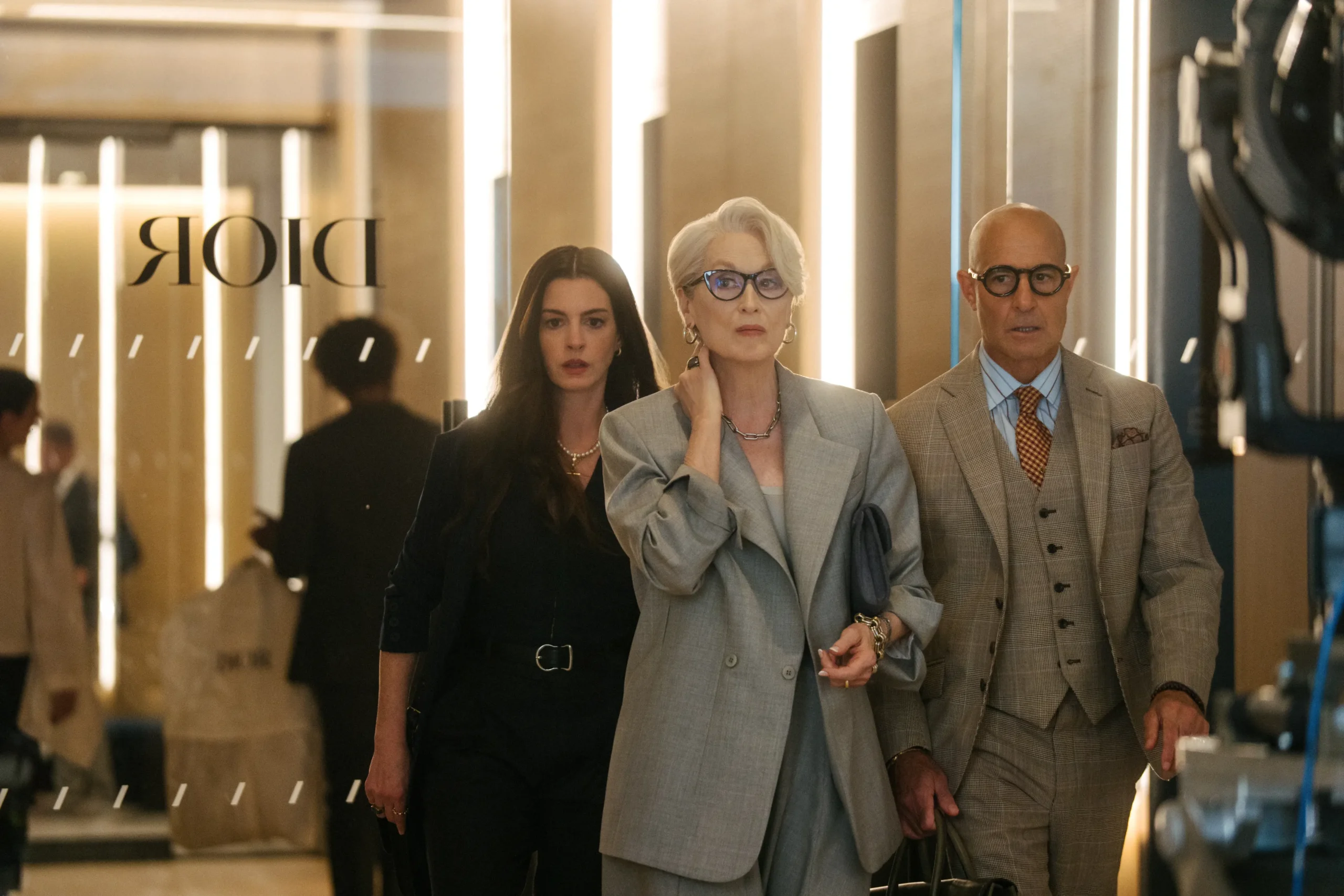
Everything fans expect is here, namely Meryl Streep, Anne Hathaway, Emily Blunt and Stanley Tucci returning in fine form; superbly used New York City, the Hamptons, Milan and Northern Italy locales (George Clooney’s Lake Como fortress should receive supporting credit); of course, the editorial and runway couture spreads and spectacles; and a fab cameo by Lady Gaga, who performs a self-parody sendup and runway concert performance. Thank you!
But what’s also here, and what was unexpected, is a takedown of the billionaire class evisceration of the publishing world and the sidelining of veterans by younger cost-cutters. You might expect this sequel to be a fizzy, escapist confection like its predecessor, but it’s a bit more—Weisberger and Frankel have something to say about “restructured” industries axing long-time experts. Even the all-powerful Miranda Priestly (Meryl Streep), high priestess of the fashion world, will face down this gauntlet.
Now, on to the fun parts. It would be hard to find a 2026 studio movie as scene-for-scene enjoyable as The Devil Wears Prada 2, which is handsomely shot, briskly edited and gorgeously production designed; it looks and feels like luxury (but it’s not romantic comedy wealth porn). The picture opens with now successful journalist Andy Sachs (Hathaway) winning a big industry award while she and her fellow writers are unceremoniously axed via group text.
Turns out Andy left the fashion world behind twenty years ago to become a serious scribe. She’s also now unemployed, and while her bestie Lily (Tracie Thomas) wants her to join the art world, she is reluctantly lured back to high fashion publication Runway. Her charter? To fix its damaged reputation after a sweatshop designer expose becomes a snowballing PR scandal.
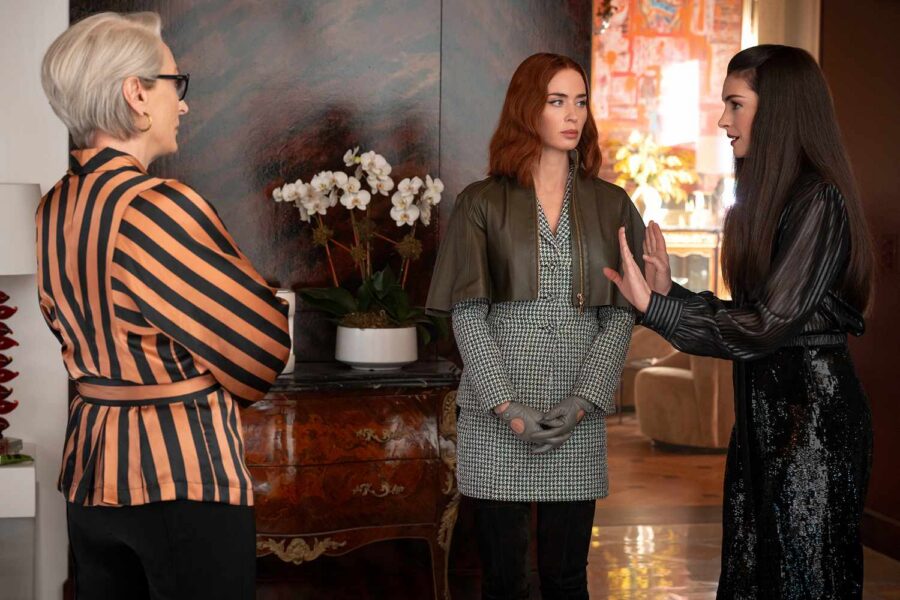
This isn’t a homecoming, and Miranda hilariously pretends not to recognize Andy, but then the workplace has changed—she’s no longer allowed to so fiercely dress down her assistants, and the famous coat throwing is a no-no; this provides Streep with a marvelous bit of physical comedy as Miranda tries to take off, and hang up, her own coat. And in a turnabout, she’s now got to contend with former assistant Emily Charlton (Blunt), graduating from tormented junior assistant to Dior fashion house exec, and whom Miranda now badly needs for advertising.
Andy doesn’t get her feathers ruffled this time around; she knows the game, and how to handle Miranda, but she’s going to have to earn respect all over again, and after being relegated to a closet-office and tasked with writing features that yield high click rates (she doesn’t), she schemes to get a big interview for Miranda with an elusive philanthropist played by Lucy Liu.
But after Runway chairman Ira Ravitz (Tibor Feldman) unexpectedly exits stage left, leaving his son and heir (B.J. Novak) in charge, Miranda’s livelihood is suddenly thrown into question, and it’s there that the movie takes off and allows Streep to find something new in the role, primarily a pained pushback against a world shifting beneath her feet. In one terrific Milan moment set against a backdrop of The Last Supper, a sharp Justin Theroux, as an inept tech billionaire, lectures her about AI; Streep is sublime, advocating for mainstays of beauty while her eyes register defeat.
In another, she queries life partner Kenneth Branagh (underused) about where she might find meaning sans career. And in a hard-won late exchange with Andy she gives credit where due—unusual for Miranda—in a moment of genuine connection. Across the film, Streep reminds us why she is and will forever be unmatched—even in smaller scenes like a brief Hamptons garden party kitchen exchange, the star authors immense detail.
Andy, for her part, is substantively written (and played by Hathaway with radiant, leading lady ebullience), holding on to her loyalty to former, unemployed colleagues while cautiously considering a secret tell-all biography of Miranda, sure to net a huge payday. But is her loyalty to Miranda worth more than a promised $350k advance? She’s also given a real estate developer as a love interest (likable Patrick Brammall) to push-pull the (de)merits of big-money urban gentrification. This relationship feels fresh and earned.
As Miranda’s steadfast workhorse art director and Runway bedrock Nigel, Tucci is flat out terrific—and terrifically touching—and it’s nice to see such warmth, particularly in a surprising moment with Streep near the close and a final exchange with Hathaway. Much was made on the first go-round about Streep’s send-up of a certain Vogue honcho who happened to be Weisberger’s real-life tyrannical task-master. This time, the Wintour-isms aren’t the whole show.
Streep as always is in top form, but her Miranda 20 years on is lightly different; it’s not that she’s lost her way with sarcastic zingers but they’re a tad less poisonous; she’s still imperious but more restrained, given to weary wisdom—though she can still toss off a laugh line like no one’s business (my favorite was a quip about human trafficking). It’s the best performance by an actress in an American film this year.
Frankel steers The Devil Wears Prada 2 to a fab closing shot, which Mike Nichols used effectively in 1986’s Working Girl and which here, as framed with an elegant pullback from an office window, has something to say about the future of three colleagues we’re surprised we’ve grown to love.
3 1/2 stars