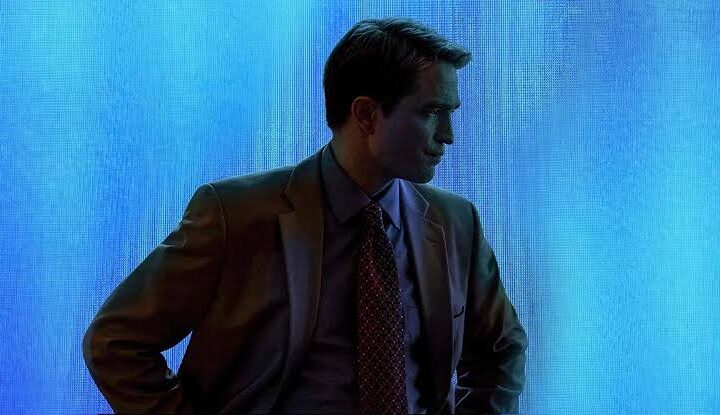
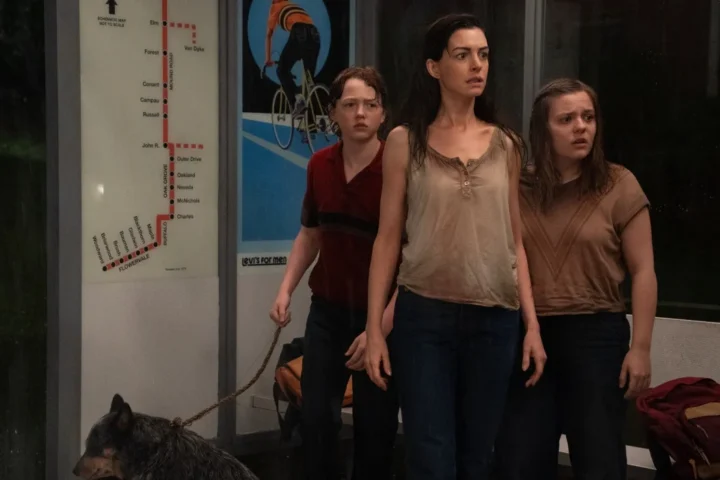
I recently caught up with writer-director Derek Cianfrance in Chicago on a bright fall afternoon on the eve of the premiere of his surprisingly tender new film, Roofman — a story about an escaped convict whose humanity becomes both his undoing and his redemption. Channing Tatum stars as Jeffrey Manchester, the former Army soldier and so-called “polite” robber who, after a string of McDonald’s heists, escaped prison and hid out in a Toys “R” Us, where he fell in love with a single mother, played with quiet strength by Kirsten Dunst. Too strange to be fiction, right?
Known for emotionally raw works like Blue Valentine and The Place Beyond the Pines, Cianfrance has spent his career exploring flawed people caught between love, guilt and grace. Roofman may be his most accessible film yet—a crime story that never loses sight of the tenderness beneath the transgression. When we met, we talked about that fragile chemistry between Tatum and Dunst and the true story that inspired the film—one that suggests a hard-earned truth: even in failure, there is grace.
ChicagoFIlm: Roofman might be your most accessible film, yet it’s still full of the emotional truths that run through your work. The onscreen connection between Channing Tatum and Kirsten Dunst is very real. We’ve seen each of them so many times over the years, but there is something revelatory here. By their final scene, I had a real emotional reaction.
Derek Cianfrance: I love both of them. They are two of my favorite actors and I’ve loved both of them as you have for many years. When I first saw Channing in A Guide to Recognizing Your Saints, he had his shirt off and looked like a dancer, but his face looked like a boxer. He moved like Gene Kelly but acted like Marlon Brando. And so I thought he was just this great contradiction of wounded, beautiful masculinity. And as we all know he’s hilarious in comedies. And then he’s brave enough to make these memoir movies. And so I just always loved him, and then I met him and I loved him more. And I realized the most important thing in his life was his daughter and he was dealing with custody stuff, and we connected on a deep human level. So I knew who the guy was. When I first met him, I didn’t tell him anything about this story.
With Kirsten, I’ve watched her from afar and been amazed that she was this child actor who is somehow a normal adult. She’s a regular, salt-of-the-earth person. And I think it’s because she’s got kids and has done this thing with her career where she’s gotten better. Who does that? Very few people get better as they get older. I cast Channing first, and when I told him that I had cast Kirsten he got nervous because he—and everyone—knows how great she is. I think she’s the greatest actor of her generation. So Channing got very nervous because he had some insecurities about whether he was a real actor or not.
And so I sensed that and decided to keep them apart through all of the prep. They never met each other. She would be in her trailer and he would be in his car, and I had guards around them so they couldn’t meet until the moment when their characters meet at the Red Lobster. I was outside with Channing before the first take of that scene. And I said, ‘Okay, are you ready?’ And he said, ‘I hope she likes me.’ And I realized that was half Channing wanting Kirsten to like him and half Jeff wanting Leigh to like him. And when he walks in, what you see in the movie was the first take. And there’s just this thing between them. What I saw on camera was what you see in the movie, which is this connection between two people who are very nervous to meet each other, but really like each other and have each other’s backs. I’m always trying to do things like that in my movies; to blur the line between documentary and fiction. Performance is everything for me. As a viewer, that’s what I watch. I watch actors. So for you to say that the performances got you—that was the intention.
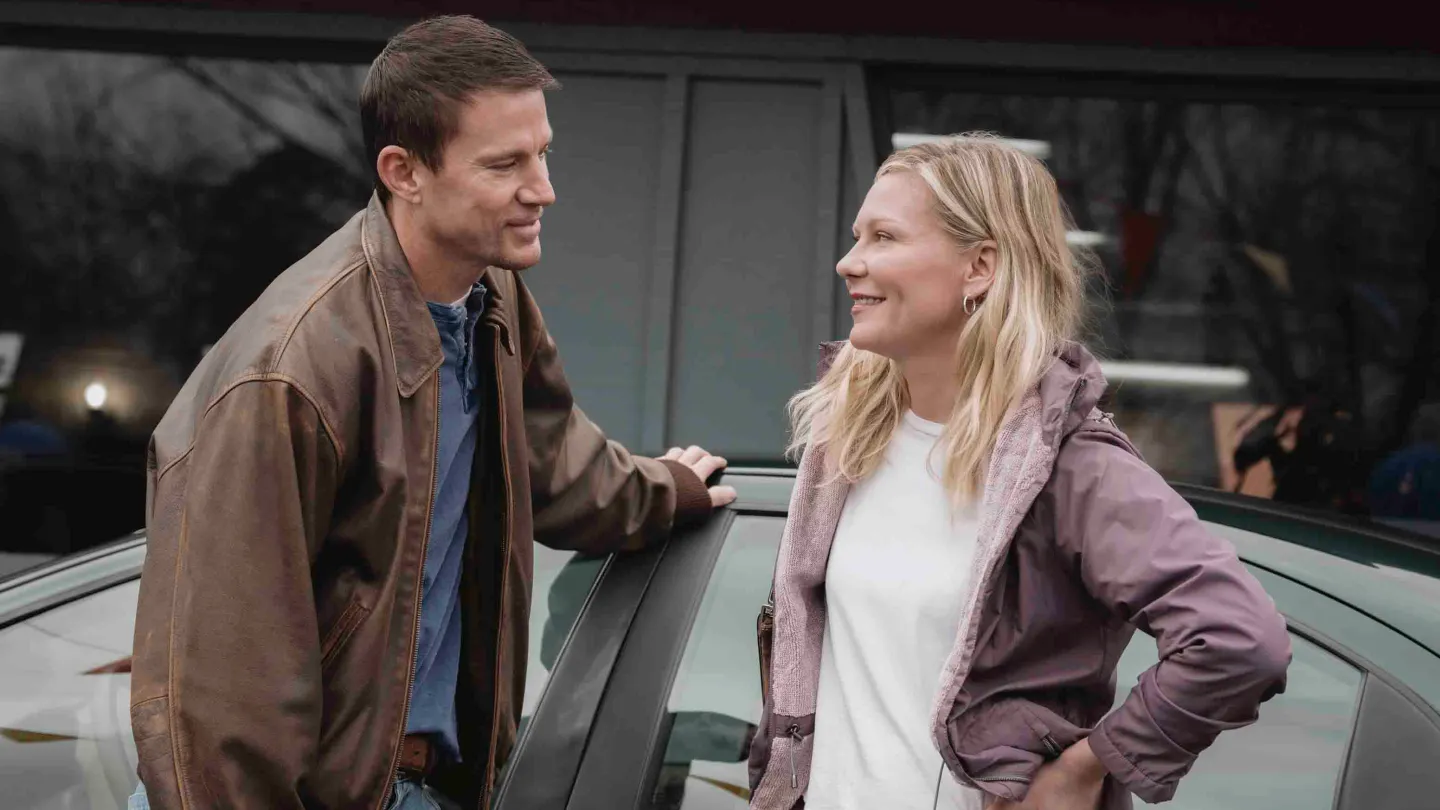
CF: Can you share what you responded to about Jeff’s story? What I took from the movie, which I also felt in Sing Sing last year, was that the totality of a person is not necessarily the worst thing that they did. In your movies you frequently have young guys with kind hearts who have to buck tough situations and maybe not exactly legally or ethically, but still from a good place, if that makes sense. And in the final scene of Roofman, I felt this and was very moved by what she says to him.
DC: Yeah. I was immediately- this as a guy that put people in freezers but gave them jackets. He was an army vet that escaped from prison and didn’t hide in the woods and eat grub and rain water. He hid in the toy store and ate baby food and candy. He was on an exit ramp to an airport with his plane ticket to freedom on the seat next to him, yet he decided to go back because his girlfriend called him and he couldn’t just ditch her. He had to say goodbye to her in person. And I started thinking that his humanity was the thing that made him an ineffective criminal. If he had been more cold-hearted and cruel we would never know his story. He’d be on a beach somewhere.
There’s this moment in the movie where Lakeith (Stanfield) says that good criminals are cold and calculating. And Jeff has got the calculations down. It’s like what you’re saying with Sing Sing: it is the man, the person, the human behind it. And I think in movies we’ve been conditioned to think about heroes and villains. But in my real life I’ve never met a hero and I’ve never met a villain. I’ve met people that do heroic acts or people that do villainous acts, but that’s not the whole picture of someone. We both know people that have done both. They do good things and bad things, so there are gray areas. That is what I was interested in with this film.
And especially after talking to the real people in the movie like Leigh and Pastor Ron. If I had interviewed them and they had told me that Jeff was an asshole or that they hated him, I don’t know if I could have made the film. The people in his life spoke of him as if he was- you know, Leigh told me he was ‘the greatest adventure of my life’ and Pastor Ron said that if the Old Testament is about judgment and the New Testament is about grace, then he tries to see things from the point of view of grace. When he met Jeff he saw him as a man and gave him that grace. I wanted the movie to take that perspective.
This interview has been edited for clarity.