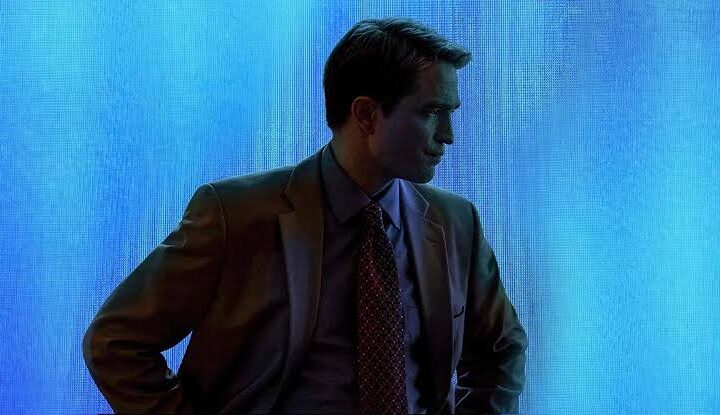
In Rental Family, Brendan Fraser plays an American ex-pat actor in Tokyo who signs on with an agency that supplies stand-in relatives and companions for hire. For Fraser’s Phillip, whose career in TV commercials has stalled, the job begins as harmless role-playing—until those scripted encounters start develop into something that resembles real life. It’s a compelling setup, and one that director Hikari understands intimately, having grown up in Japan before building a successful career in the U.S. as a filmmaker, photographer and artist.
I recently met with Hikari in Chicago—she’s funny, sharp, and effortlessly ebullient in person—to talk about the centuries-old roots of “pretending” in Japanese culture and how, in both her film and her own experiences, these transactional arrangements can open the door to unexpectedly genuine human connection.
ChicagoFilm: I had no idea—as most Westerners might not—that this phenomenon of hiring a companion for whatever purpose existed. You grew up in this world. So you knew about it?
Hikari: Yeah! Japan has always had this job called pretending, right? And really the history of it goes all the way back from like 1600 during the Edo period and Kabuki theater when people pretended to be fans of actors that were on stage and started yelling their names! That was the beginning of it.
And then people started pretending like the were the customer of a new product, buying things and returning them because their job was to get other people to buy them. I used to do a job when I was 19 where I would literally go to the department store—each floor has a different thing in Japan—and sell shoes, pretending to be the designer who knew everything about Banyan’s. So I would sell these shoes! And then I’d go to the bottom floor and sell salmon roe that freshly came from Hokkaido.
CF: In this world, how can you ever know what’s authentic and what isn’t? Wouldn’t you always suspect that you’re dealing with an actor?
Hikari: People want to get information; they want to know if it’s good or bad. As long as you know what you’re talking about it doesn’t really matter. As long as you’re there to cater and service it doesn’t matter. And if that person is feeling good wearing the shoes or tasting these salmon eggs, it’s doing the job. And so in between, you might wonder is this a good thing to do, to pretend? Is it a bad thing that people don’t face reality? Does it fucking matter? It doesn’t matter! They can do whatever they want.
CF: One interesting aspect of the movie is that Brendan Fraser’s character, Phillip, doesn’t reveal himself for a good while. We slowly come to learn about this guy and understand his needs. For example, at one later point he mentions his father’s funeral. And he makes us believe that the transaction of the job becomes less so. The connections grow for him as they do for his clients.
Hikari: I think that’s a trend. And what I wanted was to have him experiencing the life that he perhaps didn’t, or always wanted to have, right? Even though it feels transactional he invests so much to it. I think as a human being, if you have such a deep connection then you’re going to start investing. That phenomenon happens even in the rental family business. Sometimes you may be ‘working’ for a woman for a long time who has grown old and can no longer afford it. Chances are you are probably going to say, ‘Okay, but let’s have coffee at least once a month.’
CF: Or maybe you really fall in love.
Hikari: Yeah, exactly. That happens too. When people are playing family, they become like family members because they’re so invested in the relationship even while it’s transactional and there’s money involved. So I’m talking about the human connection; when you’re in the same room dealing with stuff you’re going to connect with people.
CF: As in the scene late in the film where Takehiro Hira is with his own rental family, which we’re not aware of up to that point, which is a narrative reveal that works. Phillip is a good guide for us through this world, which slowly becomes clear to us.
Hikari: Yes! As a filmmaker I always push and pul like, how much do I want to tell? How much do I want to share? Audiences are very smart. And I don’t want to spoon feed them information. I would rather have an audience wondering, ‘Why is he doing this? What’s up with him?’ Not too much, but just enough to keep the story moving forward because there should be a discovery for the audience in each scene. I think that’s more fascinating than knowing what’s going to happen next. You know, even though there’s a plot and you know things are going to be okay, I never want to underestimate the audience and want them to experience what he’s experiencing as if they’re experiencing their issues. And then also at the end, I want people to think about why this exists, and who they would hire next.
CF: Phillip is an interesting character through which to tell the story. He could have easily brought a Western perspective on the situation and played it for laughs. But it isn’t a Western view of an Eastern phenomenon.
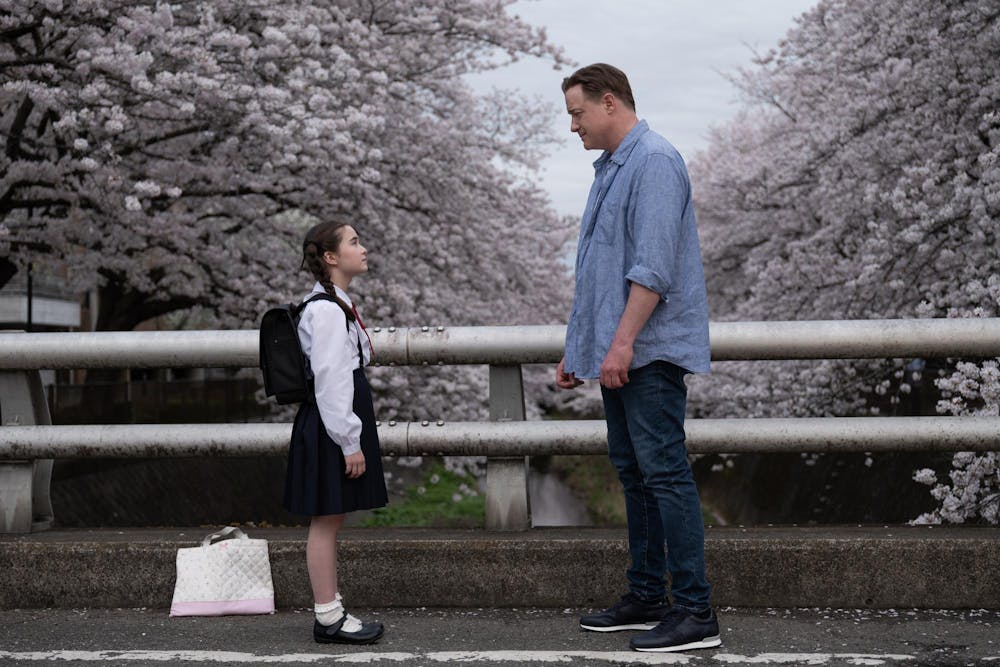
Hikari: Yeah, totally. It’s about him trying to fit into this culture and tying to understand this business and then trying to understand why he does what he does, meaning being in this country and doing what he is supposed to do. That’s why Mari’s character lectures him as if he does not understand, to which he replies, ’This is my home now.’ There’s a connection in that, and he’s been there for seven years. If you’re there in Japan for at least a year, somebody like him—six foot tall, whatever—is going to have to try to figure out how to fit it in.
CF: He does appear very tall in the movie. I believe he’s 6’3”.
Hikari: Yes, he’s super tall too in real life; he’s a bigger guy. And for Phillip it is about adapting to and respecting the culture. The line says, ‘When in Rome, do what Romans do.’ And for me, it’s not just what we do. It’s about respect if you’re in the country and the culture, wherever that may be; just learn what they do. Because for me, respect actually earns connections and friendship. Without it, you’re just going, ‘I’m just going to go do whatever the fuck I want to. Forget about the rules. And then that’s when the war starts.’
CF: Yes, and he also learns to speak the language too.
Hikari: Yeah, exactly. There’s that genuine connection that he’s trying to make. And I really hope after people see the movie (they might say), ‘Look what he did. If I go to Japan—or another country—I will at least learn the language so that I can communicate with people.’
You did this upon arriving in the United States at age 17. You thought you might go to New York or LA and ended up in Utah. When you came to the United States, what did you feel like?
Hikari: It was interesting. I felt like the only person in the room because everybody else was white. I didn’t see any African-Americans, Indians…it was just white and me. There are many Mormons. Being the only one, I learned so much about isolation and loneliness. But then also about the kindness of people who wanted to help me, which to this day I value so much. I had to figure out who was on my team and family. Once I had that, I could do anything I wanted. And I think people forget that, especially in this cell phone-facing world where you can feel so alone, comparing yourself with others instead of connecting with them. I’m hoping that people see that in this genuine connection that we create in this movie.
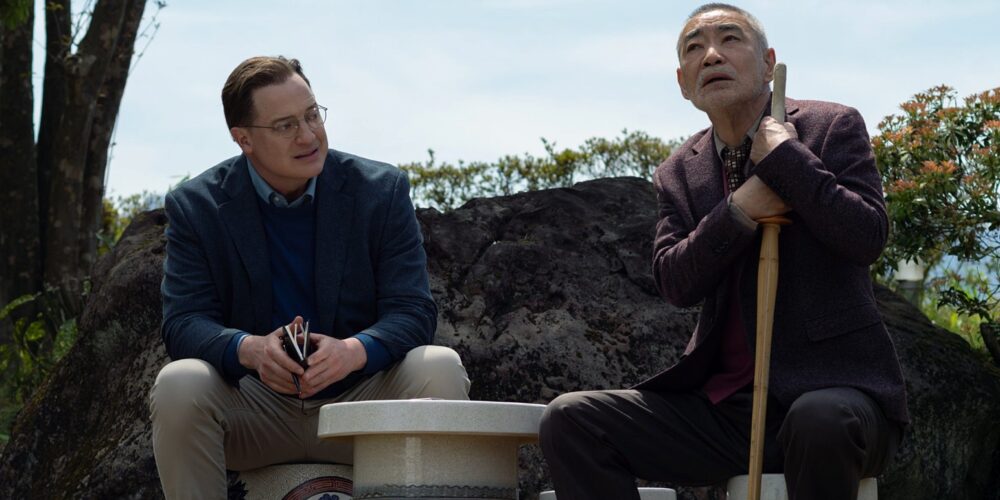
CF: You’ve got the great Akira Emoto here in an interesting role. There’s a sequence near the end of the film where he makes a sort of pilgrimage. When you talk about the genuine connection in the movie, I felt it there as well as the moment where he wanders onto a sidewalk. You’ve put two very different actors together, but you’ve created this thing between them.
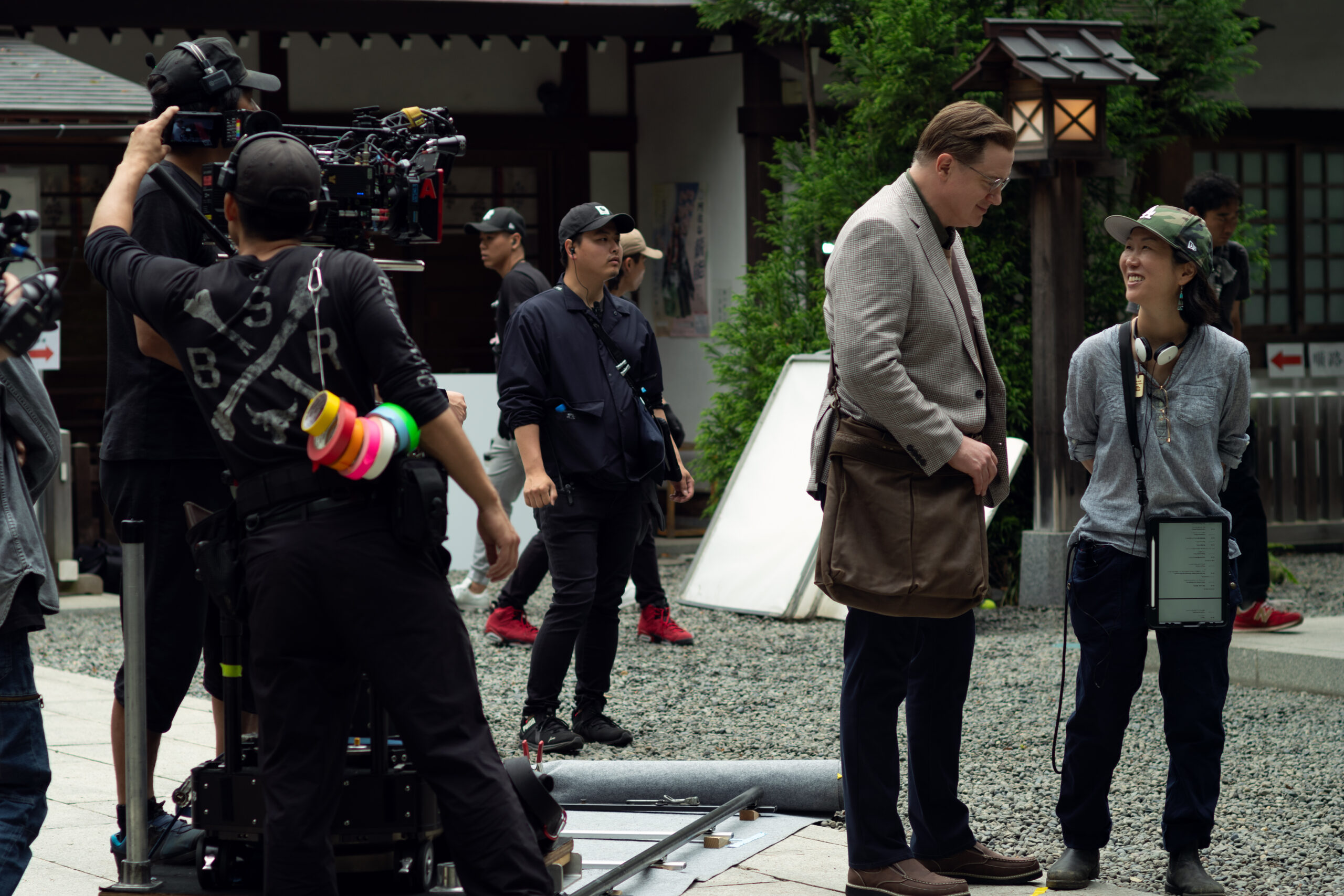
Hikari: Thank you. They’re such pros. I grew up watching Akira in everything, and with Brendan Fraser it’s the same. They had such great chemistry that all I had to do was just set it up. That was all. Akira had been working in a Japanese industry where it’s about being told exactly what to do. I’m the opposite: ‘Do whatever you want. You know the lines. Just stay in the idea. This is the beginning and this is the end of the scene. In the middle, go crazy.’ Every actor works differently. For Shannon (Gorman) it was the first time, whereas Brendan is a pro. Because everybody works differently, you have to give different types of direction. For Akira, that direction was all about, ‘Let’s just go wild. You know the lines and I know you can deliver them perfectly, but that’s not what I’m looking for. I want to see what else you would do.’ And he was like, ‘This is exhausting!’ I said, ‘I know, but let’s go play with it.’ And Brendan was just there to be there (for him). And that chemistry- really that scene is about being in the moment. They became great friends and it was just a beautiful thing to witness. I was just, like, having an orgasm behind the camera, literally!
In the scene on the sidewalk, I was almost in tears when I saw Akira doing his thing and Brendan is talking with him and then he comes back. At that moment, he doesn’t know Brendan. And he’s like, ‘Who are you?’ Brendan says, ‘It’s me.’ And at that point (Akira) knew that he should just go with it. And that scene is all them doing their thing. And that is the best thing a director can tell an actor.
CF: Young Shannon Gorman is good here too in the final scene when her character cuts through the confusion by simply observing, ‘Why do adults always lie?
Hikari: Shannon has natural talent. In the original script, I had thought we might do an end credits scene where they’re going to show up (together) as a rental family and she would be playing his daughter. We had that in the script for so many years but realized we could not show everything so decided to put it aside. In the moment you mentioned, what she says hits Phillip hard, and it’s a simple thing to consider: ‘Why would you lie?’ She genuinely wants to know. And there is truth to that. Here it was to protect someone you love, which my mom did to me.
CF: And it’s a very real moment when her mother apologizes to her.
Hikari: Yes, and she felt genuinely bad. She knew going in that she might have to apologize to her and also did not want her daughter to lie as an adult. But there’s that care that she had to protect her daughter.
CF: It’s sort of hoping that the end will justify the means.
Hikari: Exactly. And I think the movie is a study of human connection, though one that may have a different angle than a lot of people are used to. But I think that idea is what makes it interesting to continue watching.
CF: What’s the best part about your job?
The best part? Oh my god! For me, because I’ve done theater, been a performing artist, singer, in musical operas, and even designed costumes, I find creating cinema the best because it incorporates everything about my vision. There’s nothing more I enjoy than the opportunity to create. And the best part about creating includes the shots and working with the actors, which I live for. But even aspects like finding a location, choosing colors and costumes for characters when considering who they are and what they are going through. I love thinking of those things. So the best part is just to actually create from scratch! That’s my favorite.
This interview has been edited for length and clarity.