Geniality can go a long way with moviegoers, and paired with a tried-and-true formula, it can make for what’s known as a crowd-pleaser (daring, artistry, or originality need not apply). And so goes Peter Farrelly’s I Play Rocky, a very calculated nostalgia piece about the making of Sylvester Stallone’s 1976 Oscar-winning Rocky that mostly goes down easy (and pretty easy on its subject matter). It’s enjoyable, sure, primarily if you don’t look for a larger point.
The main problem is that its “making of” sections, which comprise most of the film’s second half, don’t remind us why Stallone’s classic was special in the first place. The movie, which could be considered in two halves—the struggle to get Rocky produced and the production of the movie itself—is so straightforward that it feels like a Wikipedia entry writ large.
The terrific Anthony Ippolito (The Offer), with Stallone’s signature swagger and vocal cadence in full command, plays the aspiring young “Italian Stallion” in New York City circa the early ’70s, working odd jobs while ducking out for acting auditions; his “Mike” Stallone dodges the rent in a fleabag hovel while trying to catch a break doing soft-core porn and ushering at a Manhattan movie house (turns out Stallone studied acting via the dialogue delivery in Coppola’s The Conversation). It’s here that he meets ticket-selling dream gal Sasha Czack (AnnaSophia Robb), who reluctantly gives him the time of day before insisting he drop “Mike” in favor of his birth name, Sylvester. Good advice, it turns out.
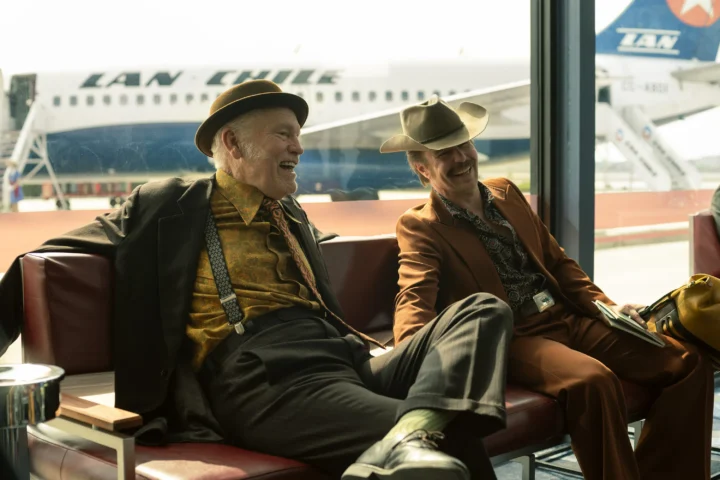
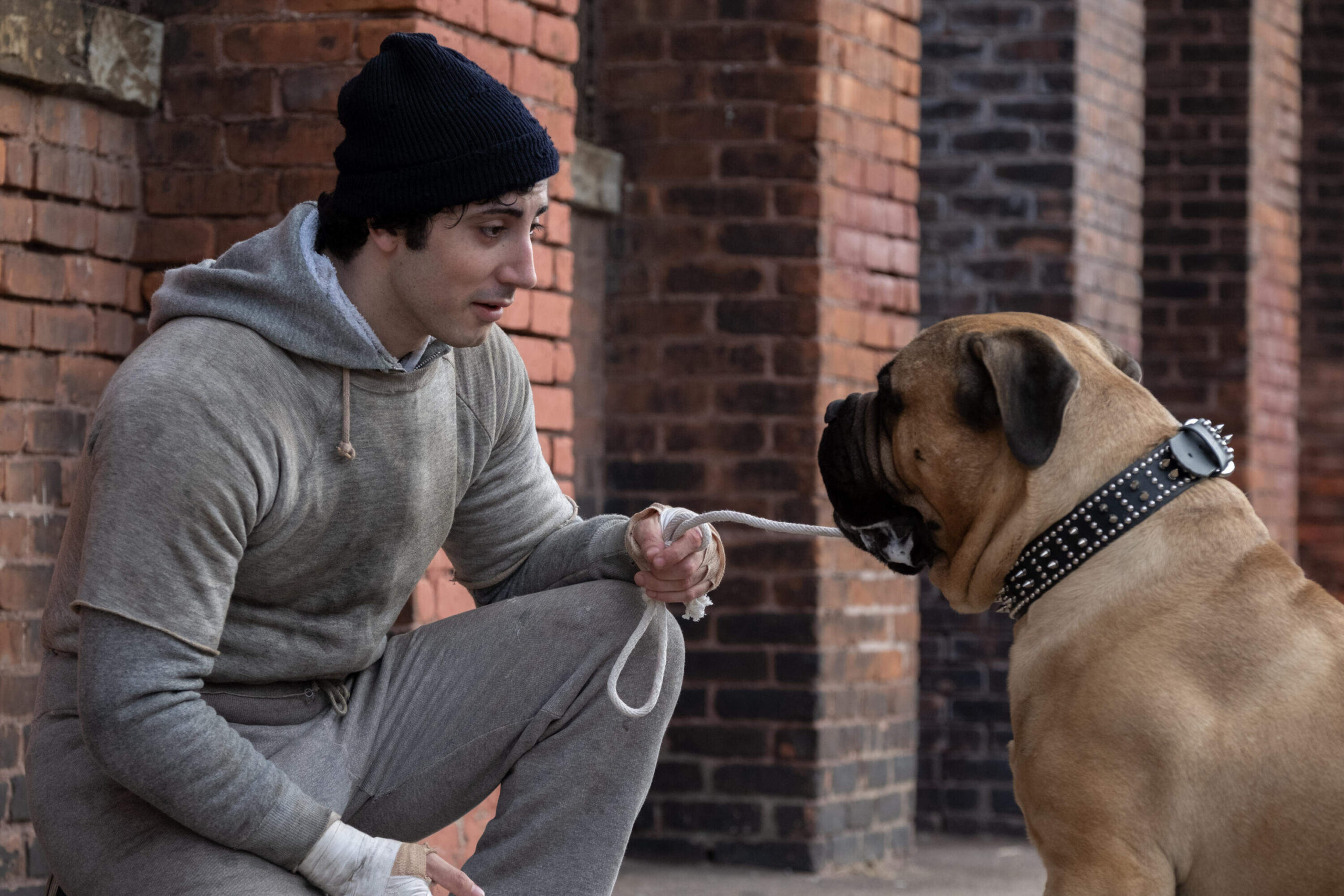
This opening stretch, which includes a lot of hustling—as Farrelly sees it, sleeping on the street with trusty best friend/pup Butkus and the squeakiest-clean vision of Stallone’s hard-knocks “rags” era—is merely the stuff of well-trodden Hollywood lore; there’s nothing new revealed in screenwriter Peter Gamble’s storybook retelling, except, perhaps, Matt Dillon’s salty turn as Stallone’s hairdresser father, a once-and-former dreamer with bygone starry-eyed acting aspirations.
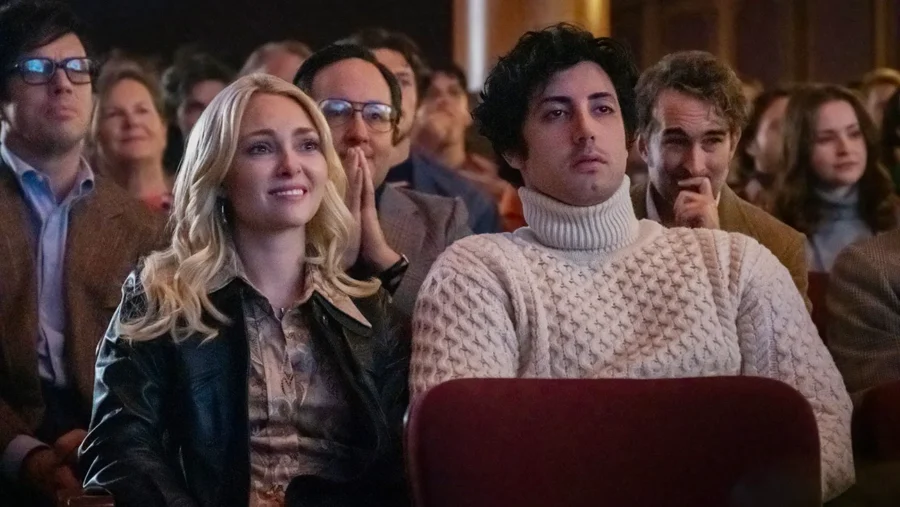
The best thing about these stretches is the chemistry between Ippolito and Robb, which will turn out to be the best thing about the movie. Early, young marrieds Sly and Sasha head west to Los Angeles, where he gets a job parking cars at an industry-connected eatery frequented by the Hollywood who’s who. Sasha is very pregnant, and even though Sly has already completed The Lords of Flatbush (which gets a brief mention), the movie treats him as a wet-behind-the-ears novice. Yet through sheer will (and charm), he muscles his way into the offices of independent producers Robert Chartoff and Irwin Winkler with his Rocky script in tow—handwritten in three days as the legend goes, then typed up by his loving wife.
Sly insists on playing Rocky Balboa, an underdog fighting for a shot at the title, to the chagrin of United Artists producer Sandy Maddox, a fictional, composite, ball-busting exec played by the droll Tracy Letts. After offers of up to almost a half million to back down (and significant screen time in debate), Sly eventually gets…to play Rocky. Okay.
The film’s second half is a bit by the numbers (though yes, we do hear Bill Conti’s Gonna Fly Now and revisit the original’s hallowed Philly locations), but the surprising best part in this section is the terrific Jay Duplass, as Rocky director John G. Avildsen (who would go on to make The Karate Kid). Duplass, himself a sharp writer, director and actor in his own right, gets some of the movie’s best lines, including a real keeper about how every movie has a pivotal moment (you just don’t know what it is until it happens). It may be Gamble’s best bit of dialogue.
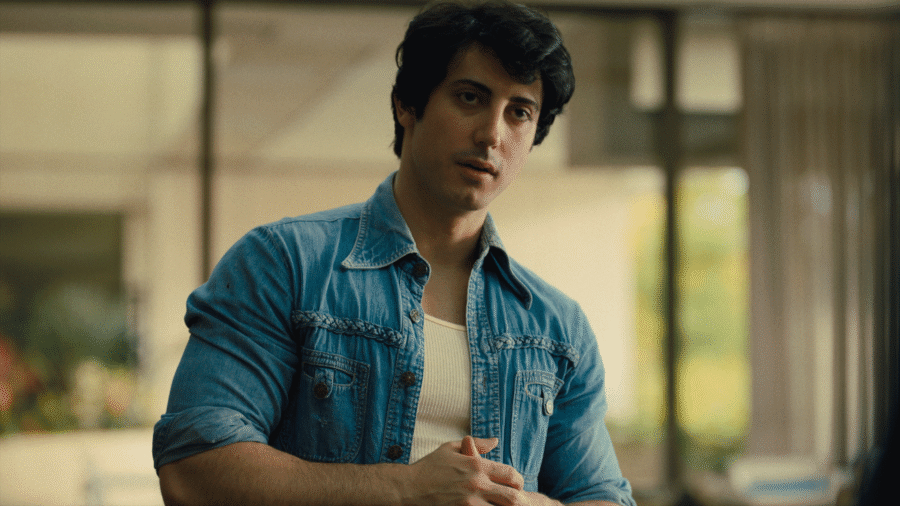
When that pivotal moment does come, it’s the film’s best and only real surprise, and Ippolito’s emotionality hints at what might have been possible in a deeper movie; he should currently be in awards consideration. Ditto Robb, who makes Sasha a dimensional “woman behind the man” and enlivens the movie each time she’s onscreen. Ditto Stephen James as a game Carl Weathers (“I would really do better if I had a real actor reading with me, goddamnit.”).
Yet despite their pleasant turns, the movie seems to have little purpose other than anecdotal trivia (Look, there’s the film’s version of Talia Shire! And Burgess Meredith!). In such a straightforward recounting, it offers little real insight into the flowering of an artist, his artistic temperament, inspirations or identity; it’s mostly about his drive, which here makes good on the film’s title even if it does feel a bit like a missed opportunity.
Well-acted, frequently charming and made with polish, Farrelly’s movie will undoubtedly be plenty enough entertainment for many. But it seems even less consequential than his 2018 Green Book, an Oscar winner not all that significant or lasting. I Play Rocky tells us little about why Best Picture Rocky became an enduring crowd-pleaser and beloved underdog touchstone; it’s a glossy recitation sans insight.
2 1/2 stars