If you grew up as a teen boy in the 1980s and had even a cursory interest in movies, you surely fell in love with the horror movie renaissance that shaped the first half of that decade (and is still imitated, reconfigured and meta-ed today), an era defined by scores of low-rent slasher and grindhouse exploitation pics from both indie schlockmeisters and major studio distributors.
Like this reviewer, many a budding young cinephile consumed a healthy diet of VHS thrills from mom and pop’s video shop, Fangoria and Famous Monsters mags and, of course, triple bills at the local drive-in. It didn’t matter if the films were “bad” per se (and still doesn’t)—high and low art meant nothing when it came to the good, bad and ugly of cheap gory thrills.
Still, on rare occasion horror films with artistic vision, flair and bonafide inspiration broke through the wave of dreck, a handful of which went on to become legend—instant classics like John Carpenter’s Halloween (1978), Sam Raimi’s The Evil Dead (1982) and Wes Craven’s A Nightmare on Elm Street (1984) were scrappy genre landmarks capturing the movie zeitgeist, spawning big box office, scores of sequels and cult audiences, still watching and worshipping a near half-century later.
Near the tail-end of this horror movie proliferation came a crafty little mad scientist epic named Re-Animator, which forty years on needs no introduction and remains a genre watermark of wildly creative gore, comedy and genuine thrills.
When Stuart Gordon directed Re-Animator, he was a Chicago theater company founder who had left the Windy City for the West Coast. The film—co-written by Gordon from an H.P. Lovecraft tale—pushed him straight into the ranks of hot horror directors. He followed it with 1986’s almost equally audacious From Beyond, cut from the same thematic DNA.
Re-Animator, the fiendish (and frequently funny) story a pair of med students “playing God” by bringing corpses back to life, was a bloody good time at the movies. It lit up the 1984 Cannes Film Festival with a wild out-of-competition screening, won over American critics and instantly became a favorite among late-night horror fans. It was followed by a pair of lesser sequels, Bride of Re-Animator (1990) and Beyond Re-Animator (2003).
In a Swiss-set opening sequence establishing everything we need to know about deranged Zurich medical student Herbert West (the deadpan inspired Jeffrey Combs), the reckless student gleefully and gruesomely re-animates a dead body to great gory effect (“I gave him life!”) before composer Richard Band cleverly appropriates Bernard Herrmann’s Psycho score for the opening credits (which are almost worthy of Hitchcock’s famed Saul Bass collabs). Flash forward to the fictional town of Arkham, Massachusetts, the setting for one Miskatonic University medical school, and West has taken up his experiments stateside.
After befriending fellow student and roommate Dan Cain (Bruce Abbott), West lets him in on his little secret—a glowing green serum which first animates a dead cat, but quickly graduates into human experimentation that spirals out of control. In the middle of this is the comely young (and now legendary) Barbara Crampton, as Dan’s concerned girlfriend Megan, who also happens to be the dean’s daughter and object of lust for another professor, Dr. Carl Hill (David Gale).
West’s experiments and their horrifying results as he attempts to “conquer death” become an aria of blood, guts, and cleverness—you’ll smile as often as you wince. As a mad scientist film it plays like Frankenstein on steroids, a dead-alive game of gruesome fun that skirts farce with who gets the needle and how it plays out—culminating in an iconic scene with a naked ingenue, a morgue table and a severed head that leaves you unsure whether to chuckle or recoil. That’s Gordon’s genius, working with famed producer Brian Yuzna to deliver perhaps the best splatter-horror comedy of all time, a marvel of tone, effects and storytelling pulled off for less than a million bucks.
The less said about Re-Animator’s story better, but there is nonetheless a lot to say about Ignite Films’ fabulous new 4K-UHD Blu-ray restoration of the film, which is a must purchase (or upgrade) quintessential collector’s piece featuring a handsome package, remarkable image/sound transfer and treasure trove of extras, all of which make it a seminal library addition for any horror enthusiast and likely the final word on Gordon’s classic.
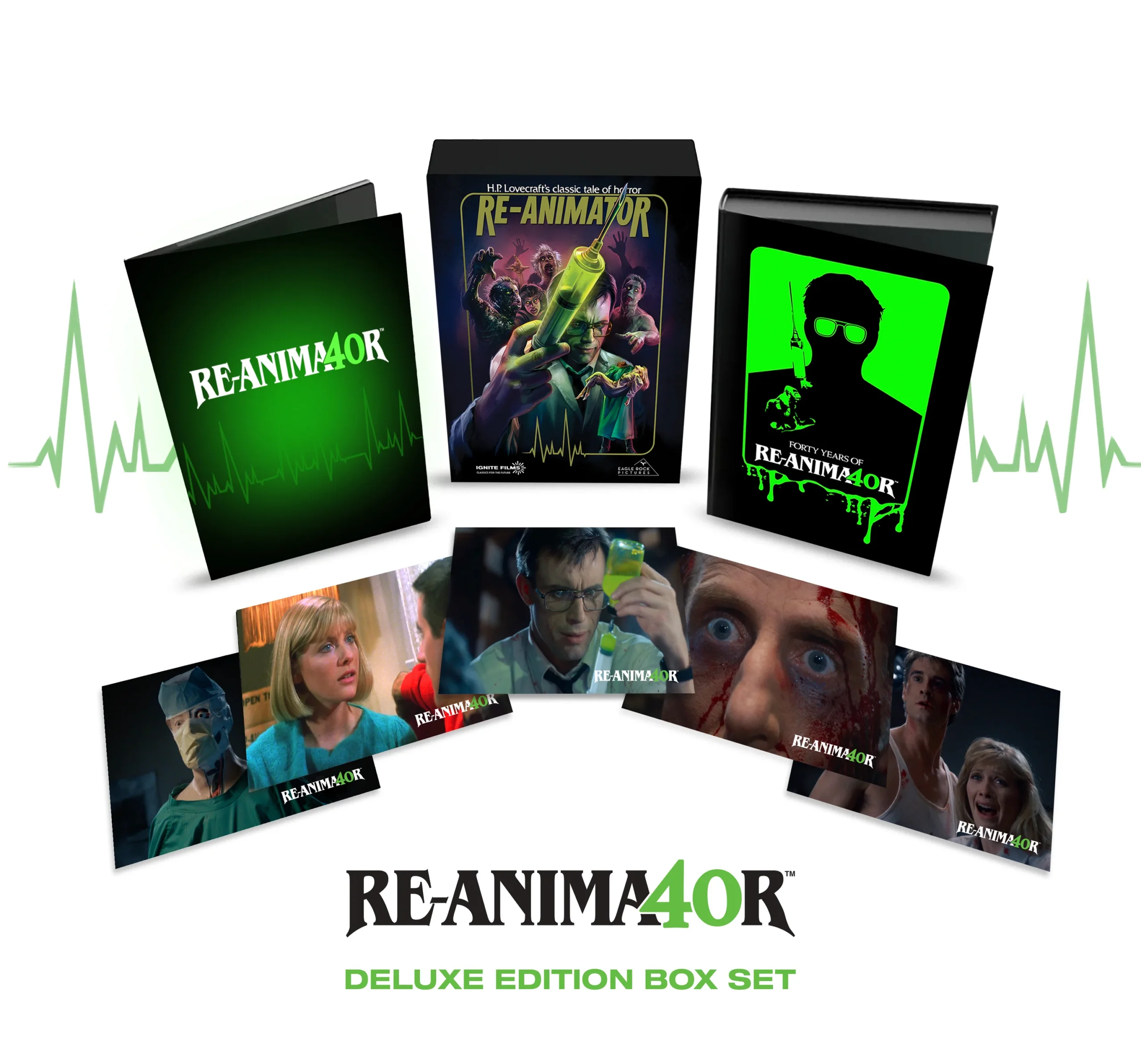
Boutique label Ignite has rolled out Re-Animator with the endorsement of producer Brian Yuzna and in several packages: at the top is the Ultimate Limited Edition Box Set, followed by the Deluxe Edition, plus 4K-UHD HDR Standard and Blu-ray Standard editions. Each is stacked with extras—depending on the set, you’ll find a handsome hardcover book, collectible cards, and more. It’s a release where Ignite has clearly gone all out.
The set gives you both versions of the film: the original 86-minute Unrated Cut that played theatrically (an R-rated edit made the rounds briefly in early home video), and the longer 105-minute “Integral Cut,” presented here in 1080p. That extended version stitches in extra scenes along with material trimmed from the shorter cut. Because of that patchwork history—and the extra padding—it’s never been the preferred edition. It’s fun as a novelty, but not really “integral.” Most purists will, quite rightly, stick with the Unrated Cut.
Image
Back in 2017, Arrow Video gave Re-Animator a 2-disc special edition with a 4K transfer on Blu-ray, a big step up from Image Entertainment’s serviceable 2012 disc. At the time it felt like a major win, with a solid presentation and extras, but looking at it now, both of those earlier editions feel like stepping stones on the way to Ignite’s release, which really is the definitive one.
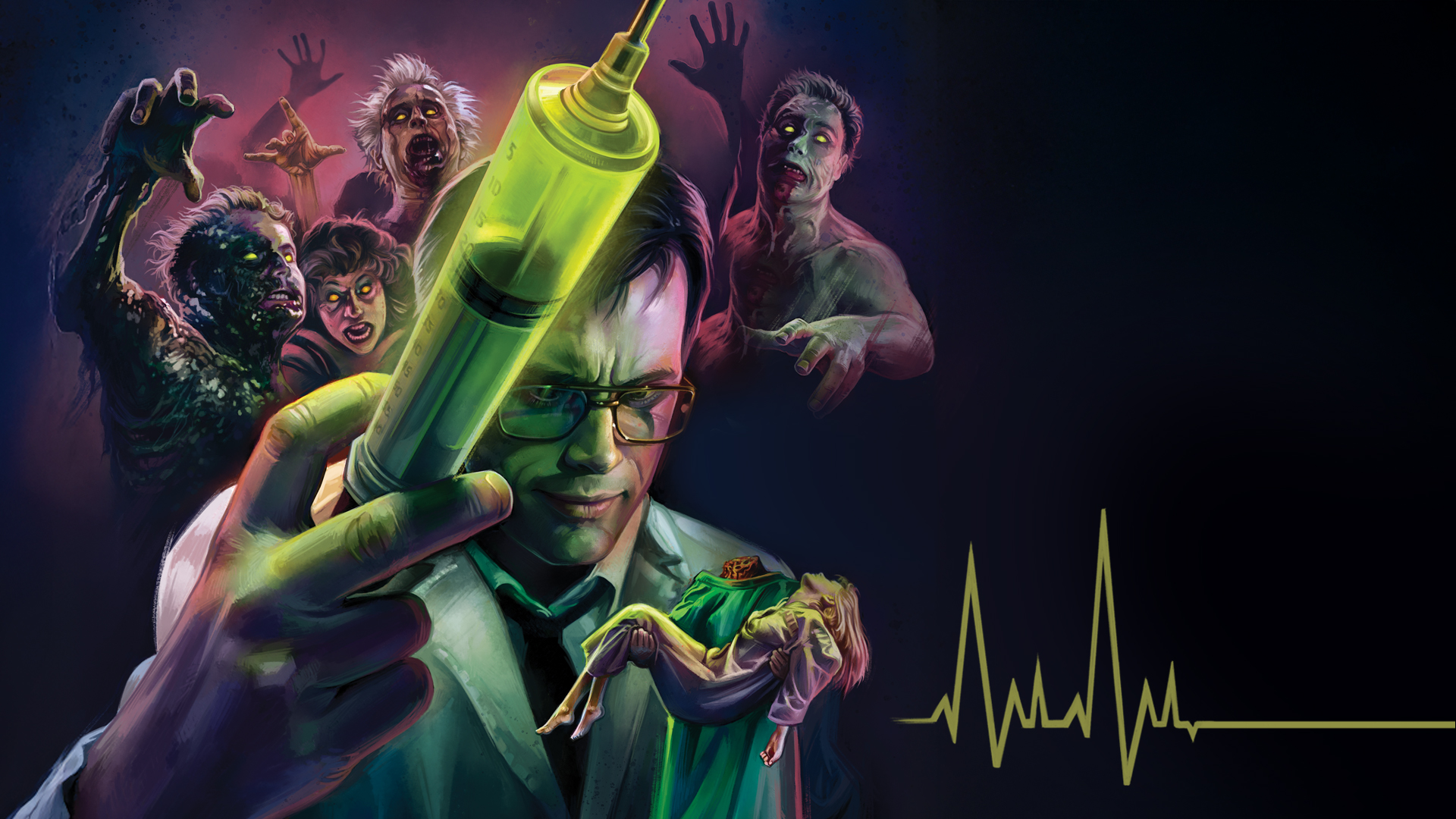
Ignite’s package, dressed in a sharp slipcase with new artwork by Naszta, marks the film’s first appearance in 4K-UHD HDR. Arrow’s version may have been sourced from a 4K scan, but it was finished in 1080p; here you get the full UHD image with Dolby Vision (and HDR10), and the difference is striking. Honestly, it might even look better than it did in theaters back in 1985. For this review I’m focusing on the 4K-UHD Standard edition—though there’s also a Blu-ray from the same transfer, I didn’t have that one for comparison.
Arrow’s disc wasn’t without flaws: a touch of instability here, the odd blemish there. I never minded much—part of me likes the grit of 35mm wear and tear, it feels true to the way the movie would have played on release. That said, Ignite’s new 1.85:1 transfer is the definition of film-like. Grain looks perfectly natural, DNR hasn’t been applied, and the image has the feel of a pristine 35mm print brought to life in UHD. Blacks are deep without crushing, shadows hold steady and clarity is razor-sharp. In spots it’s almost like seeing the movie for the first time. HDR brings extra punch to the colors, especially in the more outrageous gore effects, and the balance of dark and bright scenes avoids blooming while still showing strong contrast. Yes, you might notice the odd scratch or speck, but it only adds character.
As I watched, I kept thinking of the effects work by John Naulin and John Carl Buechler, wondering if HDR would betray the seams the way it sometimes does with low-budget horror. Happily, no—bodies, severed heads, brains and all that blood come across more visceral than ever, and the illusion holds. The gore still works, and in some ways it plays even better. This is a stunning restoration.
Sound
For sound, Ignite (like Arrow before it) gives you three options: the original LPCM mono track, a DTS-HD MA 2.0 stereo mix, and a DTS-HD MA 5.1. All of them are perfectly listenable, though none are radically different from one another. The mono is, of course, the most authentic—it’s how the film was originally recorded and played—and to my ears it’s also the cleanest, with dialogue coming through a little sharper and more direct. The stereo mix isn’t far off, and it gives things a touch more space without changing the character of the track. The 5.1 option spreads the sound slightly, but surround effects are pretty restrained, so it doesn’t feel like a full reimagining. Honestly, you can’t go wrong with any of them. I tend to bounce between mono and stereo myself and found only slight differences worth noting.
Extras
Ignite has loaded their presentation with extras that include a wealth of legacy features as well as a whopping two hours and 47 minutes of new content assembled for their this restoration:
Newly Produced Bonus Features
- Re-Animator at 40: A Conversation with Jeffrey Combs, Barbara Crampton and Brian Yuzna
- Piece By Piece: Cutting Re-Animator – A New Interview with Editor Lee Percy
- The Horror of It All: The Legacy and Impact of Re-Animator
- I Give Life: A Look Back at Re-Animator: The Musical
- Suzie Sorority and the Good College Boy: An Interview with Carolyn Purdy-Gordon
- Re-Animating a Horror Classic: The 4K Restoration of Re-Animator
- The Organic Theater Company of Chicago: A 1977 documentary featuring Stuart Gordon
- New 40th anniversary 4K UHD trailer
Legacy Bonus Features
- Integral Version (105 mins)
- Isolated Score
- Audio commentary with director Stuart Gordon and actors Graham Skipper and Jesse Merlin of Re-Animator: The Musical
- Audio commentary with Stuart Gordon
- Audio commentary with producer Brian Yuzna, actors Jeffrey Combs, Barbara Crampton, Bruce Abbott, and Robert Sampson
- Re-Animator: Resurrectus – Feature-length documentary on the making of the film featuring extensive interviews with cast and crew
- Interviews with director Stuart Gordon and producer Brian Yuzna, writer Dennis Paoli, composer Richard Band and former Fangoria editor Tony Timpone
- Music discussion with composer Richard Band
- The Catastrophe of Success: Stuart Gordon and The Organic Theater – Director Stuart Gordon discusses his early theater roots and his continued commitment to the stage
- Theater of Blood – Re-Animator: The Musical lyricist Mark Nutter on adapting the cult classic for musical theater
- Extended scenes
- Deleted scene
- Trailer & TV Spots
- Still Gallery
- Barbara Crampton In Conversation: The Re-Animator star sits down with journalist Alan Jones for this career-spanning 2015 interview
- A Guide to Lovecraft Cinema: Chris Lackey, host of the H.P. Lovecraft Literary Podcast, provides a comprehensive look at the many cinematic incarnations of Lovecraft’s work.
- Doug Bradley’s Spinechillers: Herbert West, Re-Animator actor Jeffrey Combs reads H.P. Lovecraft’s original classic story
Ignite Films’ new 4K-UHD HDR restoration of Re-Animator feels about as definitive as it gets—a collector’s dream that leaves past editions in the dust. The transfer is pristine and film-like, the HDR grading gives it real punch, and with multiple cuts plus a loaded slate of extras spread across the different packages, it’s the kind of release fans have been waiting for. Add in the sharp packaging and the excellent sound and image quality, and it’s clear Ignite pulled out all the stops. This really does feel like the final word on Re-Animator—a must-own for anyone who loves horror.
Highest recommendation.
To purchase Re-Animator from Ignite Films, visit: